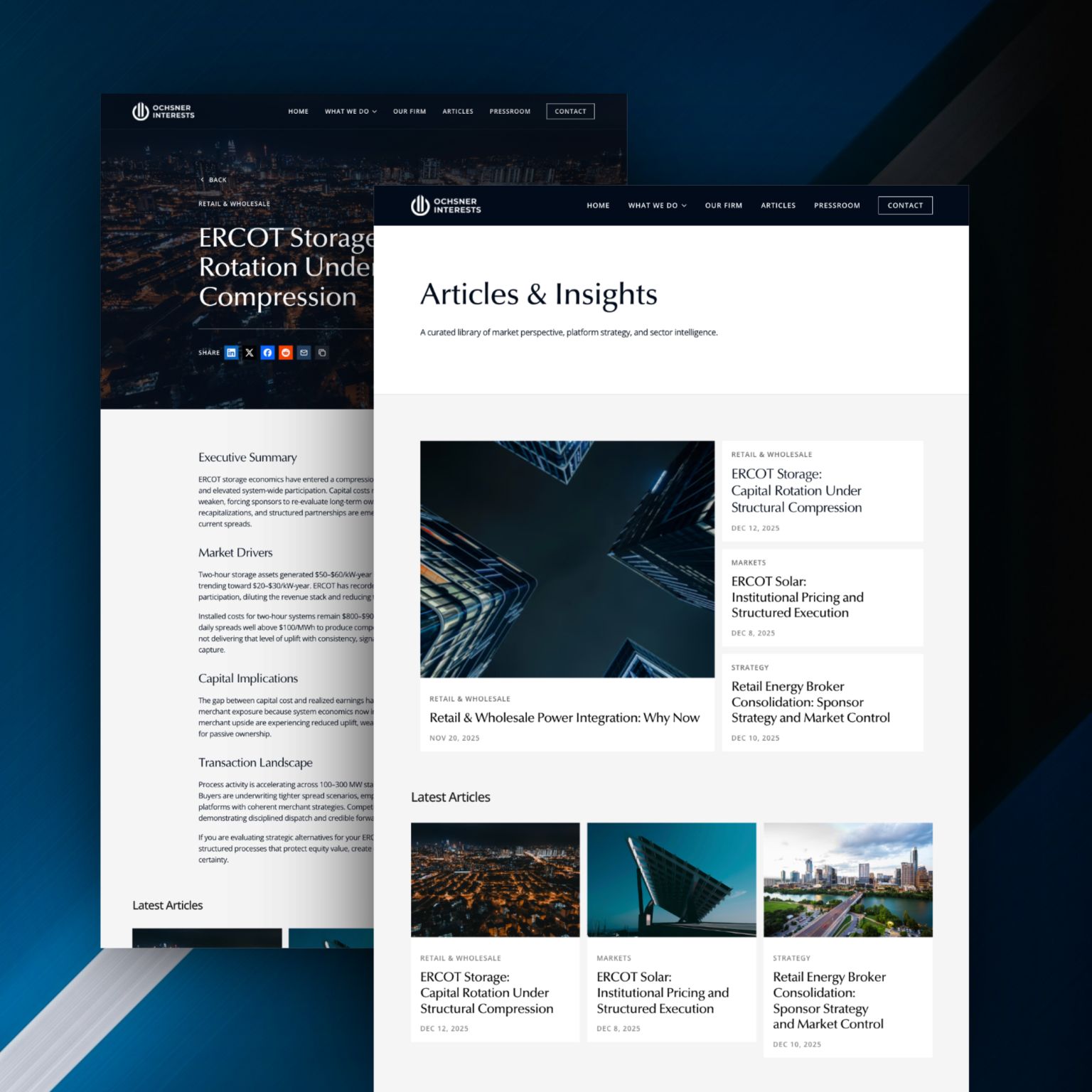

The Credibility You Already Have
You've probably already earned press. Maybe it's a Forbes feature. Maybe it's a trade publication covering one of your deals. Maybe it's a podcast appearance or an industry award. For some firms, it's years' worth of coverage sitting in emails and PDF attachments, never making it onto their own site.
That coverage is one of the most valuable assets a finance firm has. It's third-party validation. It tells an investor or allocator, before they've even spoken to you, that someone credible has already vetted your firm and decided you're worth talking about.
But if it's not on your platform, it doesn't exist digitally. And in a world where most due diligence starts online, that's a significant gap and under-leveraged credibility.
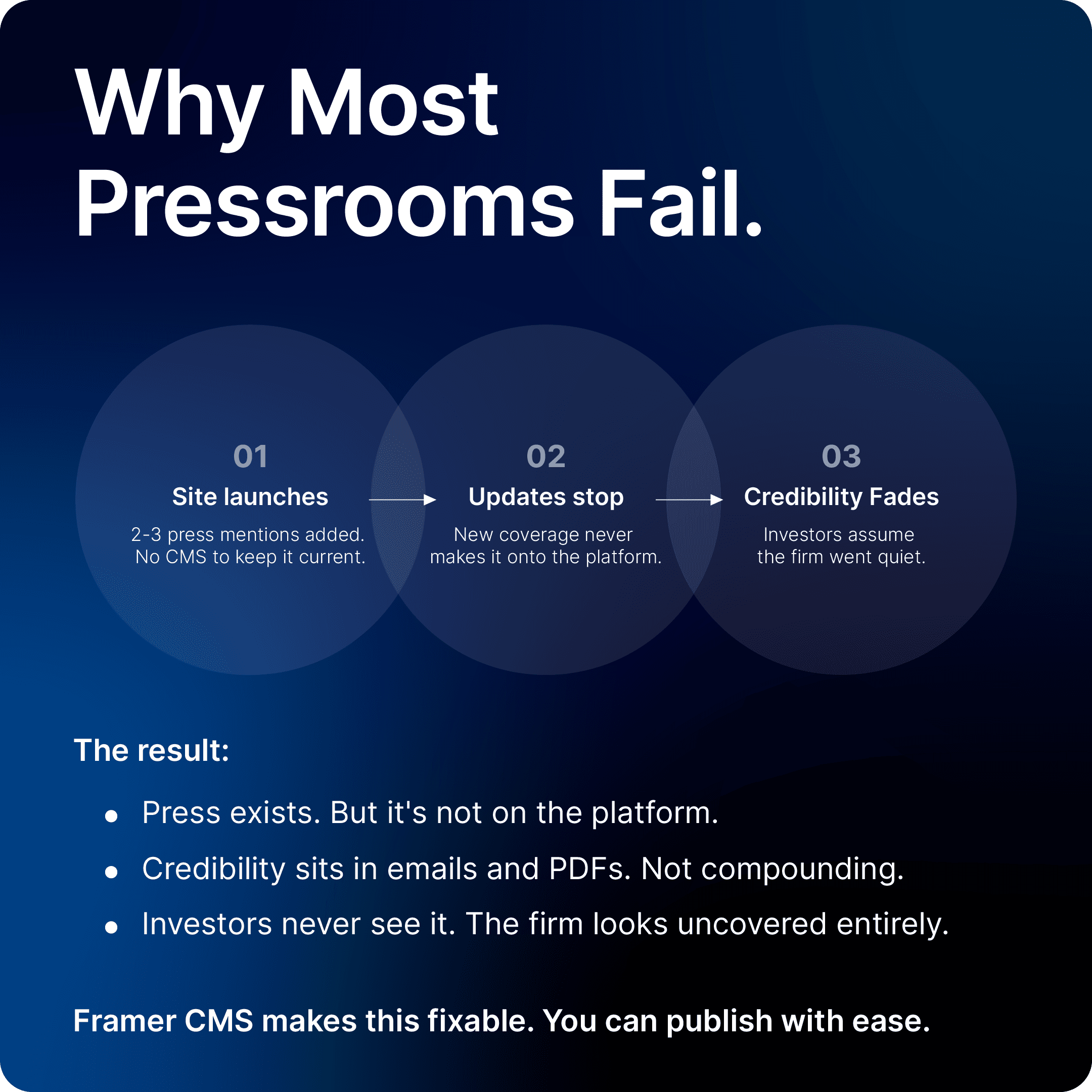
Why Most Pressrooms Fail
A pressroom is a clear signal. It tells visitors: this firm is serious, it's covered, and it's worth paying attention to.
But most finance website pressrooms are either missing entirely or set up and then abandoned. A firm launches their site, adds three press mentions from the past year, and calls it done. Six months later, nothing new has been added. The page starts to feel stale. Worse, it starts to feel like the firm stopped being covered, even if they didn't.
The problem isn't that firms don't have the content. It's that updating a pressroom on most platforms requires effort that doesn't feel worth the time. On WordPress, you're either logging into a backend that feels clunky or waiting on someone else to do it. So it doesn't get done. And the credibility signal quietly fades.
This is where CMS becomes the difference between a pressroom that works and one that sits there doing nothing.
How CMS Changes the Game
A Content Management System, or CMS, is the backbone that lets a team publish, update, and organise content on their site without touching code or calling a developer. For most firms on outdated platforms, CMS either doesn't exist or is so cumbersome that nobody uses it.
On a platform like Framer, CMS is built in. It's not a plugin. It's not an add-on. It's part of the infrastructure. And it's designed to be intuitive enough that anyone on the team can use it.
For a pressroom, that means someone on the team can add a new press feature in minutes. Upload the article, add a date, tag the publication, and it's live. No developer. No code. No waiting.
For a portfolio page, it means adding a new acquisition or property without rebuilding the page each time. The template is set. The content slots in.
For an insights section, it means publishing a new article or market update without the whole process feeling like a production.
CMS doesn't just make updating easier. It makes consistency possible. And consistency is what turns a pressroom from a static page into a living credibility signal.
What This Looks Like Across Asset Classes
The way press, media and insights get used varies depending on the type of firm. But the underlying need is the same: keep the platform current, keep it credible, keep it working.
Private Equity and Venture Capital
PE and VC firms are constantly in the news, whether it's deal announcements, portfolio company milestones, or industry commentary. A well-structured pressroom pulls all of that into one place. Investors evaluating your firm can see a pattern of activity and credibility without having to dig through Google to find it.
Insights and thought leadership sit alongside this. A market analysis piece or a commentary on deal flow trends tells allocators that your team is thinking, not just executing. It positions the firm as a voice in the space, not just a participant.
Real Estate and REITs
Real estate firms deal with volume. New acquisitions, dispositions, market updates, property launches. A CMS-driven portfolio section means every new asset gets its own page without the team having to rebuild anything. It scales with the firm.
Press coverage for real estate firms often ties to specific deals or market commentary. A pressroom that's updated in real time means every feature is working for you the moment it goes live, pulling in search traffic and reinforcing credibility with investors evaluating your track record.
Private Credit
Credit managers are constantly updating mandates, deal activity, and market positioning. Their audience, typically middle-market businesses looking for financing, needs to see that the firm is active and relevant right now. A stale site in private credit doesn't just look outdated. It looks like the firm isn't doing deals.
Insights work particularly well here. A piece on how lending conditions are shifting, or what middle-market borrowers should be thinking about, positions the firm as a knowledgeable partner rather than just a capital source.
Wealth Advisory and Family Offices
For wealth advisory firms, credibility is everything. Their clients are trusting them with generational wealth. Press coverage, industry recognition, and thought leadership all serve as trust signals before a single conversation happens.
A pressroom that consistently reflects ongoing media presence tells a prospective client: other people have already evaluated this firm and found it credible. That's a powerful signal, especially for family offices doing their own due diligence.
Long-Form Insights: More Than Just Blog Posts
There's a tendency to think of insights and articles as blog content.
Something you publish, maybe get a few reads, and move on. But structured correctly, long-form content does something much more valuable for a finance website.
A well-written piece on a specific topic, say market conditions in commercial real estate lending, or how PE firms are approaching exit strategy in the current cycle, doesn't just demonstrate expertise to a handful of people. It becomes a destination. People searching for that topic find it. They read it. They stay on your site longer. And if the content is genuinely useful, they come back.
Forget chasing clicks or gaming algorithms, this is about creating content that's actually valuable to the people you want to attract, and making sure it's findable when they're looking for it.
Some firms go further. A longer piece can sit alongside a downloadable resource, a whitepaper, or a data summary. Not as a gated lead capture form. Just as something useful that's available if the reader wants it. The value is in the content itself. The download is just a bonus.
This approach works because it respects the reader. It doesn't feel like a funnel. It feels like a firm that's genuinely invested in educating its audience. And that builds the kind of trust that eventually turns into a qualified conversation with a high-intent lead who's actively aligned with your thesis.
The Compounding Effect
Here's what most firms miss: press, media and insights aren't one-off events. They compound.
A press mention from six months ago still has value if it's on your site. An insight piece from last quarter still pulls in search traffic today. A pressroom that's been consistently updated over two years tells a much stronger story than one that was set up and forgotten.
The firms that treat this as an ongoing part of their digital presence, rather than a one-time setup, are the ones that see the most return. Not because they're spending more. But because every piece of content, every press feature, every insight article is quietly building credibility in the background.
CMS makes this sustainable. Without it, the effort required to keep a pressroom or insights section updated eventually wins out, and the content stops. With it, the barrier is so low that it actually gets done. And once it gets done consistently, the value adds up.
Final Thoughts
The credibility most finance firms need is already there. The press exists. The expertise exists. The deals and the track record exist.
The gap is almost always on the platform side. The infrastructure isn't set up to make it easy to publish, update, and leverage what the firm has already earned.
A well-built CMS, a structured pressroom, and a thought leadership section that actually gets maintained are not luxuries. They're the difference between a finance website that sits there and one that actively works to build trust, attract the right visitors, and position the firm for growth.
The content is the strategy. The platform just needs to support it.

Let’s stay connected.
For more insight on digital strategy in capital markets, follow Kelsey from VERCEPT on LinkedIn or get in touch to discuss your next move.